A barn does not haunt you the way a house does.
A house has rooms. Rooms have purposes — sleeping, eating, gathering — and when those purposes end, the room remembers. It becomes a kind of accusation. The empty kitchen says: a family was here. The child's bedroom with the small bed still pressed against the wall says: something ended here that should not have ended.
A barn is different. A barn is a working structure, pragmatic, built for animals and harvests and the business of survival. When a barn collapses, it collapses forward — it falls toward the earth it was built on, returning to it. There is something almost honest in the ruin of a barn.
And yet.
The Persistence of Structure
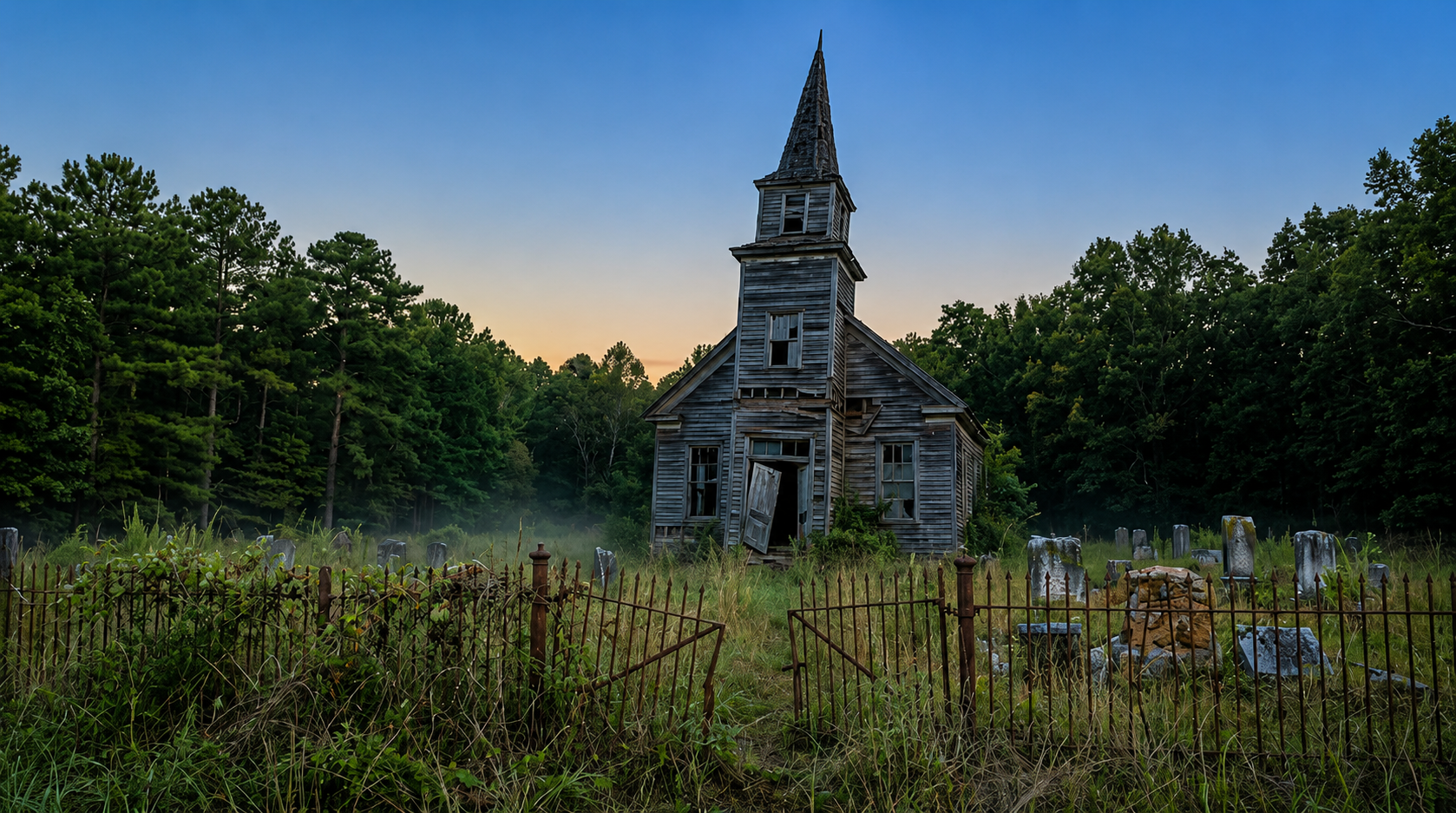
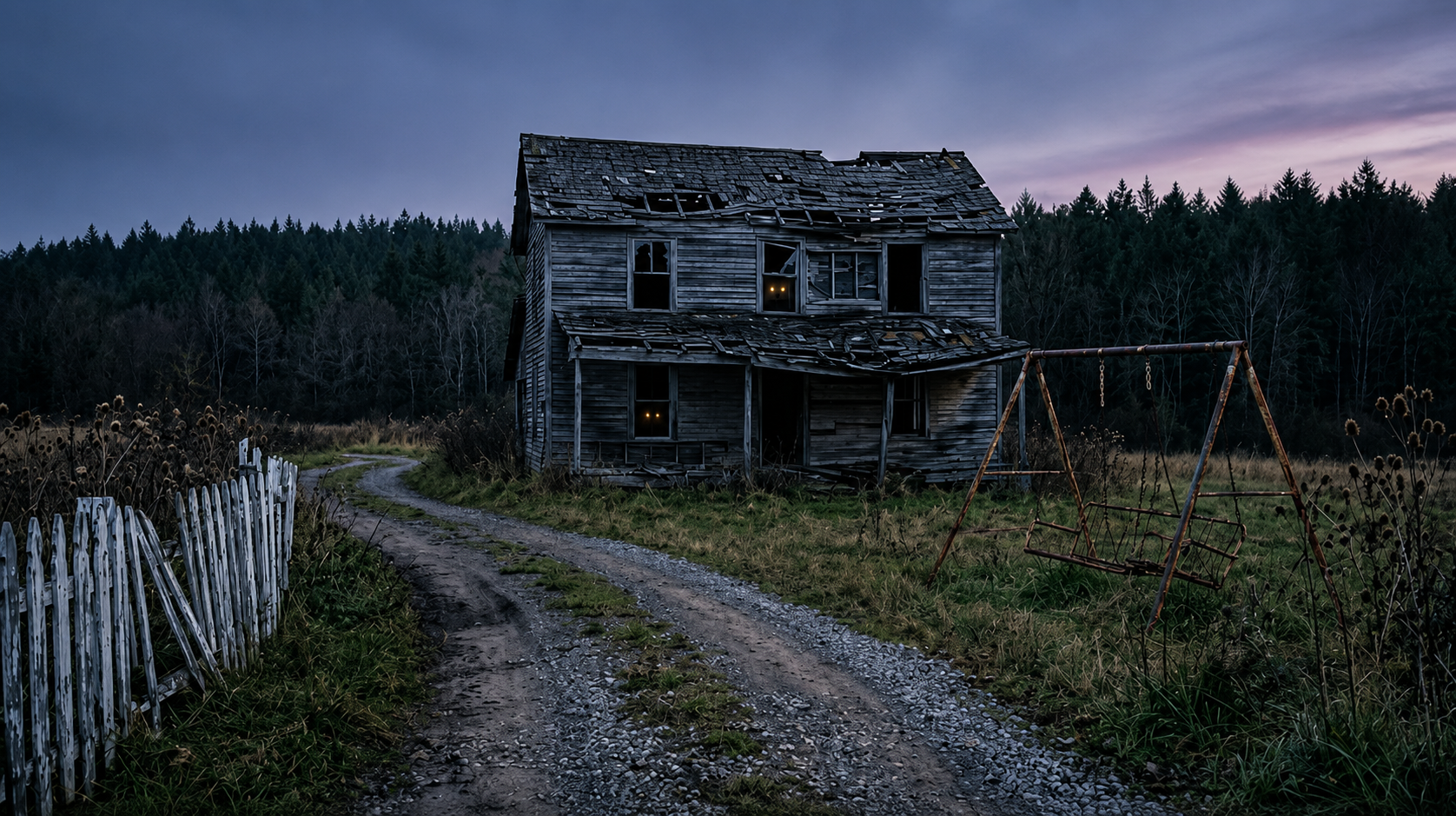
Drive through any rural county in the American South and you will see them. Barns with roofs caved in like broken ribs. Farmhouses with windows black as oil, the glass long gone. A church at the end of a gravel road with the door hanging open, the congregation departed for reasons no one left behind to explain.
These structures don't disappear. That's the thing. They persist, year after year, decade after decade, outlasting the people who built them, the families who used them, the communities that made them necessary. Long past the point of usefulness they stand, deteriorating with a kind of patience that feels, in certain lights, deliberate.
What are they waiting for?
The Answer Horror Writers Already Know
They're waiting for someone to notice.
A building — any structure, any place where human beings lived and worked and loved and feared — is a recording device. Not in any supernatural sense, necessarily. In a material sense. The wear pattern on a threshold tells you how people moved through it. The height of a doorframe tells you something about the people who built it. Initials carved into a beam. A child's height marked in pencil on a kitchen door frame, dated in a hand you'll never trace.
To enter an abandoned rural structure is to be read by it. And the horror, when it comes, is not usually a ghost. It is the sudden, vertiginous understanding that the building knows things about the people who lived here that no one living does anymore. That knowledge is sealed inside it. And now it has you.
For Writers
Place is not backdrop. Place is character.
The farmhouse, the barn, the church at the end of the road — these are not settings in which your story occurs. They are participants in it. They have histories that predate your protagonist's arrival and will outlast their departure.
Give your buildings time on the page before the horror arrives. Let the reader understand what the place was before they feel what it has become. The distance between those two things — what was and what is — is where the fear lives.
Rural darkness is not atmospheric. It is structural. It is built in.